
Nordic Mindfulness™
Back To Earth – Back To The Rhythm of Life.
We have spent the last few hundred years getting extraordinarily good at separating ourselves from the conditions human beings once lived within. We no longer need to know what season our food grows in. Darkness doesn’t mean we stop working because we can turn on a light, weather doesn’t necessarily determine the rhythm of our day, and we can speak to someone on the other side of the world while barely knowing the person living next door. Increasingly, we can move through an entire day without touching the earth, sitting in silence or really noticing what is happening around us.
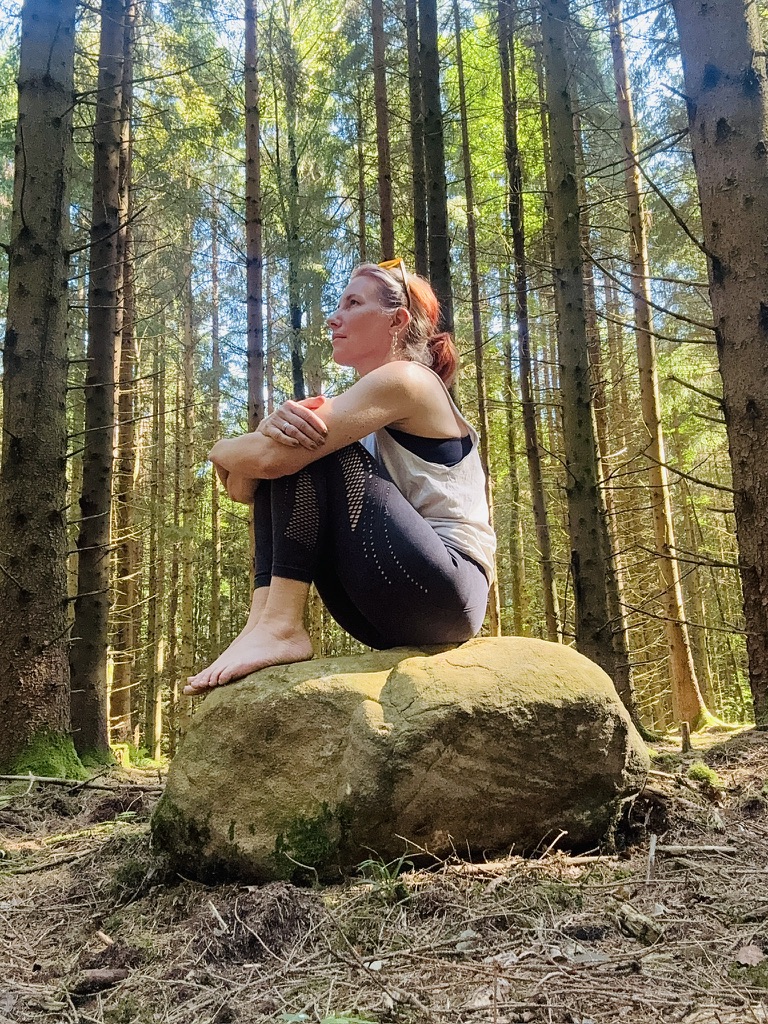
None of that means progress is bad. I quite like electricity. But I do think it’s worth asking what happens when we remove ourselves further and further from the conditions human beings evolved within.
Maybe some of what we’re experiencing today isn’t because we’ve somehow become bad at managing stress or need another tool to help us cope with increasingly busy lives… maybe we’re simply more disconnected than we realise from the earth, from our own natural rhythms, from each other, from ourselves and from that much harder to define sense that we belong to something beyond our individual lives.
And if that’s true, maybe there is something to be gained from looking back. Not because life was better in the past. In many ways, of course it wasn’t. But for most of human history we lived much closer to the land, the seasons and each other. Our cultures developed in relationship with the places we inhabited because they had to. We paid attention to changing conditions, adapted to what was available and depended on both the natural world and the people around us in ways many of us no longer have to think about.
There is wisdom in that. Not necessarily in returning to the way people once lived, but in understanding what those ways of living might remind us about what human beings still need now. Because while our world has changed beyond recognition, we haven’t stopped being human… and maybe moving forward doesn’t always mean leaving everything behind.
Ancient Wisdom for the Way We Live Today
Growing up in Sweden, many of the things I would later become interested in weren’t things I thought about as wisdom or philosophy. They were simply woven into the culture. Our relationship with nature and the seasons, creating comfort through long periods of darkness, getting outside regardless of the weather, adapting to changing conditions, making use of what was available and understanding, perhaps without even consciously thinking about it, that different times and seasons ask different things of us.
Of course, none of that is exclusively Nordic. Most cultures, if we go back far enough, developed through an intimate relationship with the land, climate, seasons and ecosystems around them. But when I began looking more deeply into the wisdom embedded within my own culture, I became interested in what it might still have to teach us about living well now.
Not how to become more Scandinavian. Not how to recreate the past. But what happens when we begin paying attention again to some of the things that human beings understood through living much closer to nature, and what the natural world itself might still be able to teach us.
That exploration eventually became Nordic Mindfulness.
>> Read More About Nordic Mindfulness™ And How It Differs from Traditional Eastern Mindfulness <<
So, What Is Nordic Mindfulness?
Nordic Mindfulness is a living dialogue with nature and life… a practice of deep listening, embodied presence and creative connection. Rather than standing back and simply observing our experience, it asks us to step further into it, immersing ourselves more fully in life’s intelligence, rhythms and messages.
Meditation can be part of that, but Nordic Mindfulness isn’t defined by meditation or by any single practice. It is something we live. It can happen through movement, creativity, time in nature, relationships, the way we respond to changing seasons and circumstances, or simply through becoming more aware of what our own body and the world around us are communicating.
This is also where it differs from some of the mindfulness approaches many of us are familiar with. There can be enormous value in learning to step back, observe our thoughts and emotions and create some space around our experience, but Nordic Mindfulness is interested in what happens when we also move in the other direction… when instead of only observing life, we participate in it.
We listen, feel, move, create and respond. We allow ourselves to be affected by the world around us and recognise that we’re affecting it in return. Presence isn’t necessarily something we find by removing ourselves from the experience. Sometimes it comes from stepping further into it.
Nature Isn’t “Somewhere Else”
We often talk about connecting with nature as though nature is somewhere else. We drive somewhere to “get into nature”, take a walk through a forest because we know it’s good for our mental health, or spend a weekend away and talk about how nice it was to disconnect.
But we are nature. That sounds incredibly obvious when you say it, yet so much about the way we live suggests we’ve forgotten it.
Our bodies respond to light and darkness, activity and rest, nourishment, movement, other people and the environments we place ourselves in. We have rhythms whether we pay attention to them or not. We can override those rhythms, and modern life makes us remarkably good at doing exactly that, but we don’t somehow stop being biological beings because we have calendars, smartphones and artificial light.
And the relationship goes both ways. We aren’t simply people who can use nature to make ourselves feel better. We’re participants in the same living systems. Our choices affect the environments around us just as those environments affect us.
So reconnecting with nature isn’t only about spending more time outdoors. It’s about remembering the relationship we’re already in.
Six Capacities For Flourishing
Through my exploration of Nordic cultural wisdom, six principles kept emerging: Balance, Resilience, Adaptability, Integration, Simplicity and Synergy — B.R.A.I.S.S.

Over time I came to see them as more than principles. They are capacities for flourishing, and not only for human beings. We can see them operating throughout the natural world.
A forest needs the capacity to adapt to changing conditions. It needs resilience when it experiences disruption. It exists through constantly shifting forms of balance rather than some permanent state of equilibrium. Resources move through systems, different parts depend on one another, and the health of the whole emerges through relationships between countless living things.
When those capacities are diminished enough, the system struggles to flourish.
Human beings aren’t separate from that.
Our capacity for balance matters, but so does our ability to regain it when life knocks us out of it. We need resilience to move through difficulty and adaptability when circumstances change. Simplicity can help us recognise what is actually needed rather than continually adding more. Integration allows us to bring together the different parts of ourselves and our lives rather than living in fragments, and synergy reminds us that what becomes possible through relationship can be very different from what any one part can create alone.
B.R.A.I.S.S. isn’t a set of rules for creating a perfectly balanced or mindful life. It’s a way of recognising and developing capacities that help living systems flourish.
And that raises a bigger question, because if human beings are part of the living world rather than separate from it, our flourishing and the Earth’s flourishing can’t ultimately be treated as two completely different things. A way of living that allows us to thrive while continually diminishing the systems that sustain us isn’t really flourishing.
THE SIX CAPACITIES AT A GLANCE
Balance – Flowing with life instead of forcing it.
Resilience – Finding strength through integration, not just endurance.
Adaptability – Moving with change rather than resisting it.
Integration – Bringing together mind, body, nature, and creativity.
Simplicity – Letting go of what’s unnecessary to focus on what truly matters.
Synergy – Aligning with the natural rhythms of life, creativity, and energy.
From Independence to Interdependence
One of the extraordinary things about modern life is how independent we’ve become. We can live alone, work alone, entertain ourselves alone, order food without speaking to another person and solve an astonishing number of problems without asking anyone for help. There is freedom in that, and I don’t think we should pretend otherwise.
But human beings have never really been independent creatures. We depend on one another, on other species, on functioning ecosystems, on the earth beneath us and on countless relationships and systems that modern life has made very easy not to notice.
Maybe the more useful idea is interdependence.
We can be fully ourselves and still need other people. Our wellbeing can be deeply personal while also being affected by the communities and environments around us. What happens outside us affects what happens inside us, and what happens inside us changes the way we meet and affect the world.
We are individuals, but we are never only individuals.
Back to Belonging…
And maybe this is where all of it eventually leads… belonging.
Not simply belonging to a family, friendship group or community, although those things matter enormously, but a broader sense that we belong to the world we’re part of. To the earth, to other people, to ourselves, to the living world around us and, however we individually understand it, to something greater than our individual selves.
I don’t think the answer is to abandon technology, stop striving or recreate the lives of people who lived hundreds or thousands of years ago. The challenge is much more interesting than that: how do we keep what modern life has given us without becoming increasingly disconnected from the things human beings, and the world we depend upon, still need in order to flourish?
Maybe mindfulness can be part of answering that question, but not simply as another technique we add to increasingly busy lives to help us cope with them. It can also be a way of paying attention to how we’re actually living, what we’re participating in and what relationships we’ve stopped noticing.
A way back into relationship with ourselves and our own nature, with each other, with the earth and with something beyond ourselves.
Not stepping away from life, but stepping further into it… remembering that we don’t simply live here. We belong here.
Want to go deeper?
Click below to access the
Foundations of Nordic Mindfulness™
Ebook.
Experience Nordic Mindfulness Firsthand
Work with Madelaine 1:1—personalised guidance, creative immersion, and deep transformation.