
You Didn’t Think of That Alone: Our Ideas Have Ancestors
Why are we so desperate to be original when nothing really is?
What is originality, really?
We’ve become so obsessed with being original that we seem almost afraid to admit when our thinking has been influenced by someone else. As though an idea is somehow less ours, or less original, if something or someone helped spark it in the first place. But does anything really come entirely from us?
Sure, ideas tend to pop up in our minds, sometimes seemingly “out of nowhere”, but does that mean they originated from us in isolation? I don’t believe so. Why? Because just like a forest, we operate through synergy.
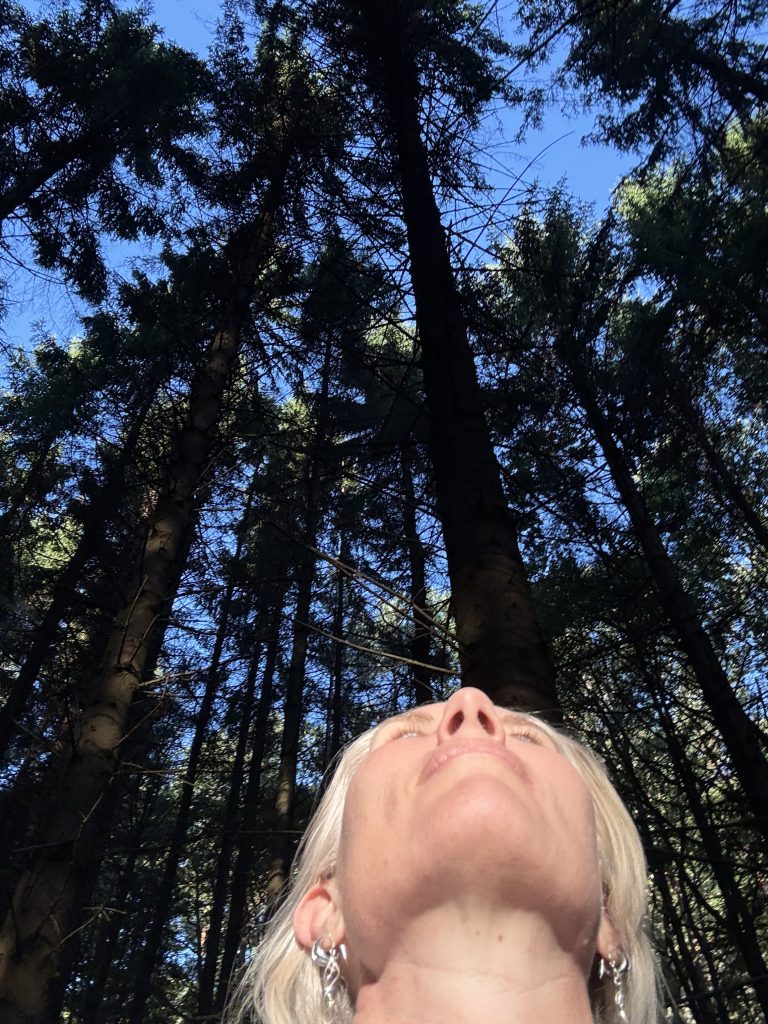
Think about an idea “whose time has come”, as Wayne Dyer used to put it (which actually predates Wayne Dyer and is attributed to Victor Hugo, which is kind of hilarious considering the topic!). What actually happens? We get inspired by something. Maybe we hear something, read something, experience something or have a conversation with someone that sparks inspiration or expands our thinking. Then we take that and bring it together with all these other parts of ourselves, our knowledge, our wisdom and our own way of seeing the world, and just like that, something else is born from it.
We call that original, and yes, it is, because we’ve expanded on what was there and created something new. But that new idea couldn’t exist without all the things that came before it.
Our ideas have ancestors. There were people who came before us and there are people walking beside us. Teachers, researchers, colleagues, artists, writers, clients, friends. People whose thinking opened something in us, challenged something, sparked something or helped us take the next step.
Yet we’ve started seeing that influence as a problem. We’re so invested in looking clever, unique and original that admitting we’ve been influenced by someone else can start to feel like it makes what we’ve created less original, or somehow less valuable. And that’s where it gets really interesting, because our need to feel original can actually make us less willing to acknowledge how our ideas came about in the first place.
“Somewhere along the way we attached such value and status
to appearing original that we became willing to claim others’ ideas
as our own.”
We can become so attached to something being ours that we don’t want to acknowledge the people or ideas that influenced it. We can even take something someone else has created, change it enough to make it look like our own and conveniently leave out where it came from, because acknowledging the influence feels like it takes something away from us. But it doesn’t. Being influenced by someone doesn’t mean that what comes next isn’t yours.
Sometimes we’re building quite directly on something that already exists. We take an idea and ask, what does this mean to me? What else could this mean? What happens if I look at it from here instead? And then we use our own intellect, our own wisdom and our own experience to take that thinking somewhere else. That’s not less intelligent because we weren’t the first person to have the thought. That’s what colleagues do, it’s what researchers do, it’s how fields of thought develop.
And if we stopped ourselves from thinking about or sharing anything that wasn’t completely original, where would that leave us? Nothing would ever develop. We need people to take ideas and think about them, question them, expand on them, connect them to other things and take them somewhere else.
The problem isn’t influence, it’s the idea that originality requires us to have arrived there alone. Because none of us did.
“The problem isn’t influence,
it’s the idea that originality requires us to have arrived there alone.”
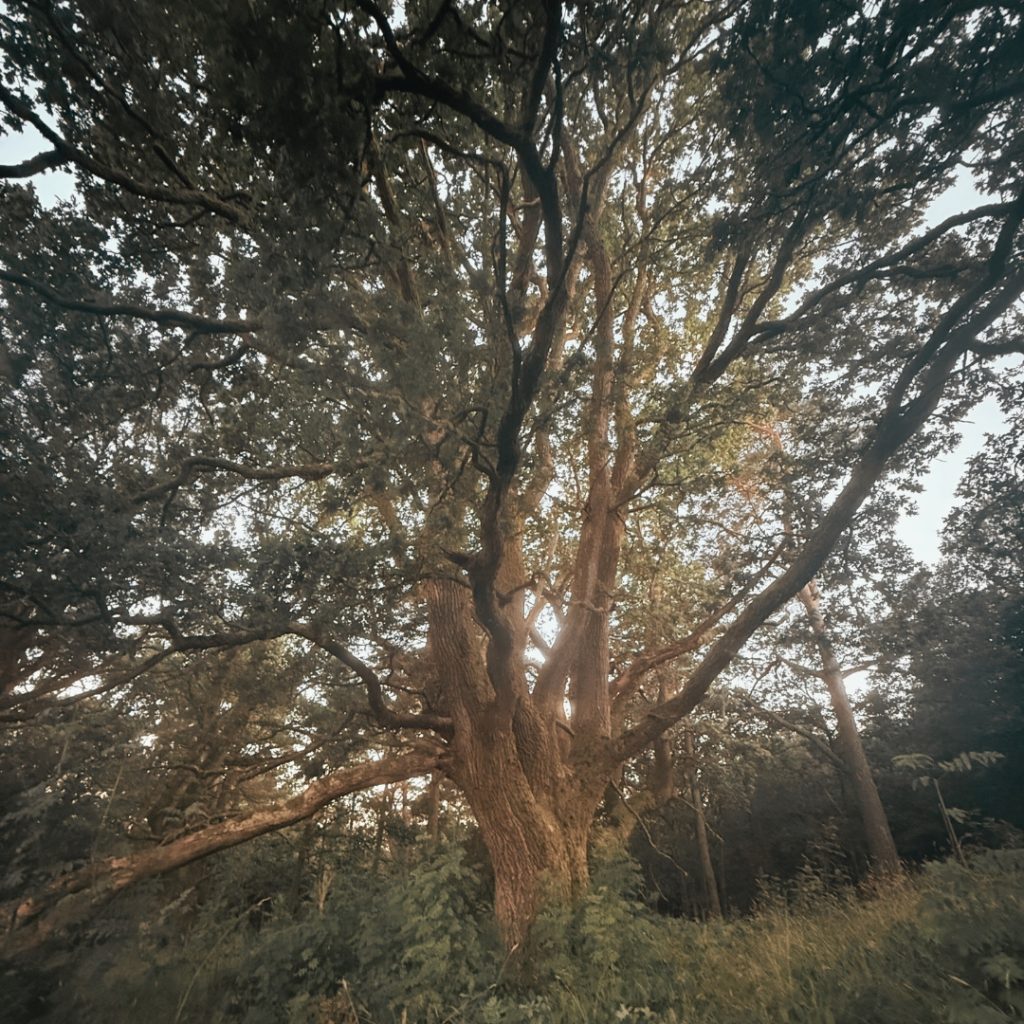
When I was out recording sounds for my JORDIC project, I came across this enormous old oak tree growing on a Viking burial ground. It was hundreds and hundreds of years old, and I recorded its biofeedback, the tiny electrical signals moving through the tree, and it was bursting with activity.
There was something about standing there listening to this old tree, rooted deep in soil where people had been buried centuries before, that stayed with me. My own ancestors were Vikings, and here was this tree growing in that ground, taking what it needed from the soil and the ecosystem around it, while at the same time giving so much back. Its leaves fall and become part of the soil again. Its acorns become food and potentially new trees. Its branches, bark and canopy provide places for other life to live. Even as parts of it die and decay, they become part of something else.
The oak didn’t grow in isolation. It couldn’t have. An oak doesn’t exist separately from the forest. It grows enormous and supports life around it. Other trees and plants benefit from the conditions it helps create, and the oak in turn exists because of the ecosystem supporting it.
A tree doesn’t become any less itself because the oak contributed to the conditions that allowed it to thrive. It still has its own life, it grows in its own way and it contributes something of its own back into the forest. And the oak doesn’t become less of an oak because it needs the forest either. They don’t need to pretend they grew alone.
“Why are we so determined to look like we grew alone?”
Originality doesn’t mean creating something from nothing. We are constantly taking in what we see, learn, experience and hear from others, and all of that becomes part of how we think and what we create. And from those influences and impressions… something happens. We make connections that haven’t been made before, see something from a different perspective or take an existing idea beyond its current understanding. That expansion is the contribution. And once we put it into the world, it becomes something that someone else can think about, question, build on and take somewhere we never would have taken it ourselves.
Acknowledging what influences us doesn’t make our contribution less valuable, quite the opposite. All ideas have ancestors, and originality doesn’t require us to pretend they don’t. And knowing the difference moves you from imitation to contribution.