
When Trees Sing: Where Mysticism Meets the Nervous System
“Among trees, something ancient in you recognises itself.”
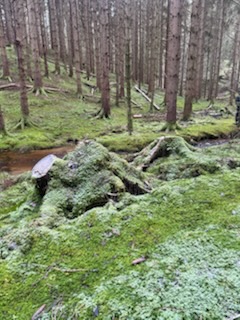
Stand in a forest long enough and something in you slows without being told to.
Your breathing changes.
Your shoulders drop.
Your thoughts stop chasing each other.
Nothing has been fixed. Nothing has been solved. And yet, something is different.
This is the territory I’m working in now.
Not a project in the usual sense. Not a method. More like a place — where art, nervous system science, ancestral memory, and the living intelligence of nature meet.
At the centre of it is something I call Nordic Mindfulness™. Not a technique, but a remembering. A way of being rooted in principles our ancestors lived by because they had to: balance, resilience, simplicity, integration, connection to land. These are not poetic ideas. They are human regulation codes.
And the deeper I go, the more I see that what we call mysticism and what we call science are often describing the same doorway from different sides.
Listening Beyond Ourselves
“My music is not made alone — it is created in partnership with trees.”
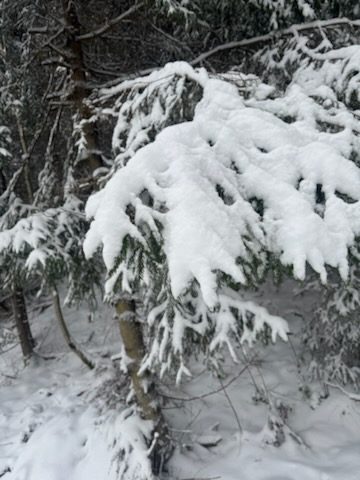
I create music in partnership with trees. That sentence usually lands as mystical. And yes, there is mystery in it. But it’s also relational and precise.
Using a device that reads bioelectrical activity, I receive subtle electrical data from trees — spruce, pine, birch, rowan. Within those signals, patterns emerge: pulses, intervals, tonal suggestions. Sometimes what comes through feels unmistakably like a melodic phrase. Not a finished song, but a motif. A beginning.
That’s where the conversation starts.
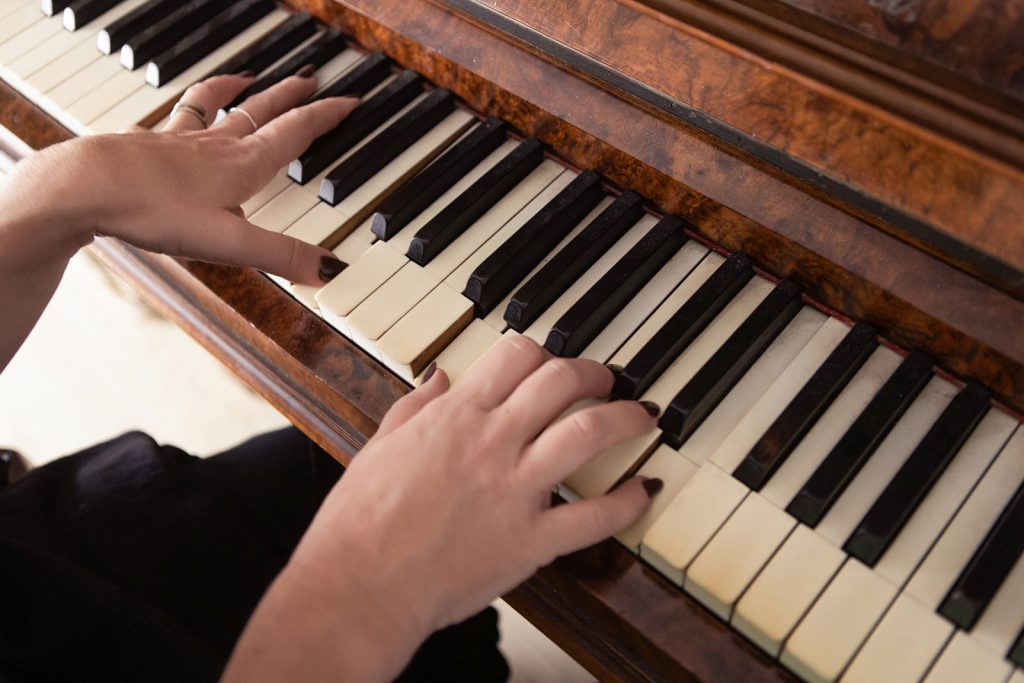
I don’t simply translate the data into sound and leave it there. I listen. I respond. I take fragments of what I hear and build around them — adding harmonic structure, chords, rhythm, space, breath. My voice enters as another layer of listening. The tree offers a pattern; I answer. The composition becomes a dialogue rather than a product.
Even the language I sing in reflects this space between worlds. I don’t use English or Swedish or any known language. Instead, I sing in what I call Jordic — a sound-language without fixed meaning. It’s closer to vocal texture than vocabulary, more like ancient vocal traditions such as joik, where the voice doesn’t describe something but embodies it.
Without literal words, the voice can connect beyond concept. It meets the listener where sensation, memory, and feeling live — the same place the trees speak from.
This isn’t extraction. It’s co-creation. A partnership. A conversation that unfolds through tone, rhythm, and presence. And it’s beautiful.
To modern ears, this sounds unusual. To older cultures, it would have sounded natural. Forests were not scenery. They were relationship. Communication. Intelligence in another form.
When we allow that possibility, something in us shifts. The boundary between “me” and “environment” softens. And that softening is not only spiritual — it’s physiological.
The Nervous System Knows This Place
We don’t regulate through thinking alone. We regulate through rhythm, sensory coherence, and environments that signal safety.
Research into flow states shows that deep presence arises when attention can settle into something continuous and immersive (Csikszentmihalyi, 1990). Music research shows that sound activates emotional and attentional networks together, often bypassing purely analytical processing (Levitin, 2006). Studies on meditation and attention highlight repetition and immersion as gateways into sustained awareness (van Vugt, 2017).
Forests naturally offer these conditions: repeating patterns, layered sound, non-threatening unpredictability, spaciousness.
When music is shaped around steady, organic rhythms and sustained tones, the nervous system recognises those conditions. It softens its vigilance. Attention gathers. We drop into what I think of as the deep now.
Mystical language might say: the tree is singing with you.
Scientific language might say: your nervous system is entraining to coherent rhythm and environmental cues of safety.
Both are pointing to the same experience of reconnection.
Why This Became Necessary
There was a time when my outer life looked successful — building organisations, teaching, supporting others — yet inside I felt increasingly cut off. Productive, capable, but not fully present in my own life.
What I needed wasn’t another strategy. It was a return.
Back to slower rhythms.
Back to land.
Back to listening instead of producing.
In forests, I began to feel something I hadn’t realised I’d lost: a sense of being part of a living system rather than carrying everything alone. That shift — from isolation to relationship — is where Nordic Mindfulness took form. Not as theory, but as lived necessity.
Art as a Way Back Into Relationship
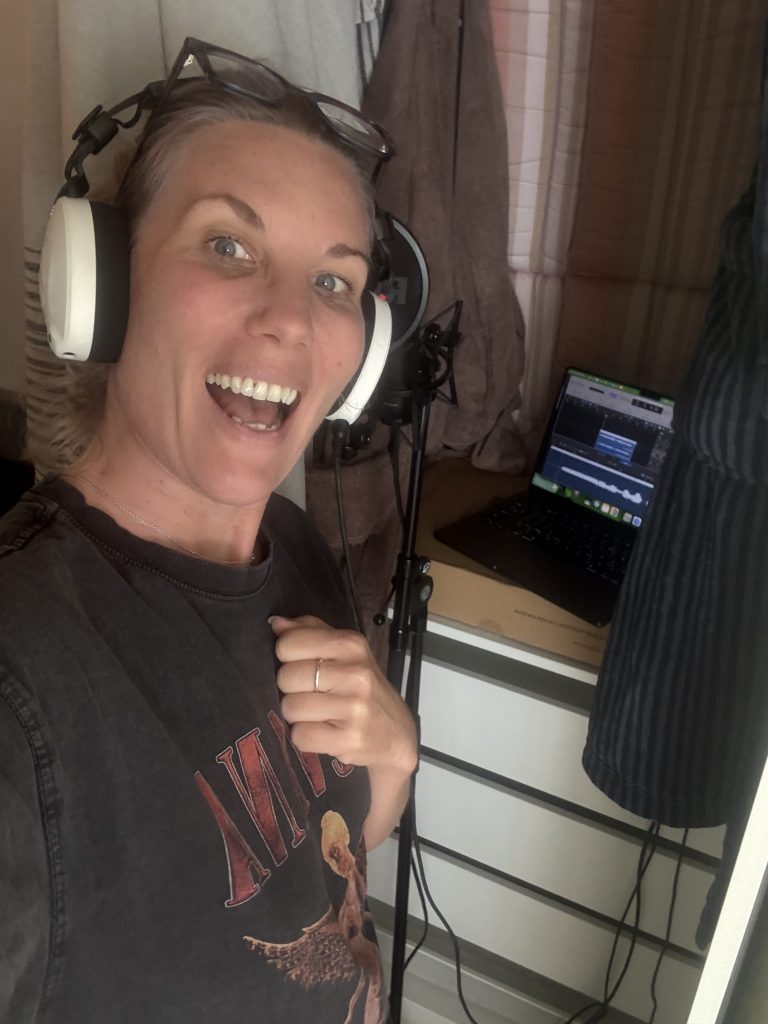
The music I’m creating now is not meant to entertain or impress. It’s meant to create conditions.
Each composition is shaped around a human principle — balance, resilience, integration and others. But these are not lessons to understand. They are states to enter.
You don’t only think about balance; you sit in a soundscape shaped through partnership with the steady presence of spruce.
You don’t only analyse resilience; you feel the grounded persistence of pine through rhythm and tone.
It becomes experiential learning through immersion. Art functioning as a form of nervous system technology — not digital, but embodied. A crafted environment that helps the body remember what the mind cannot force.
A Different Kind of Remembering
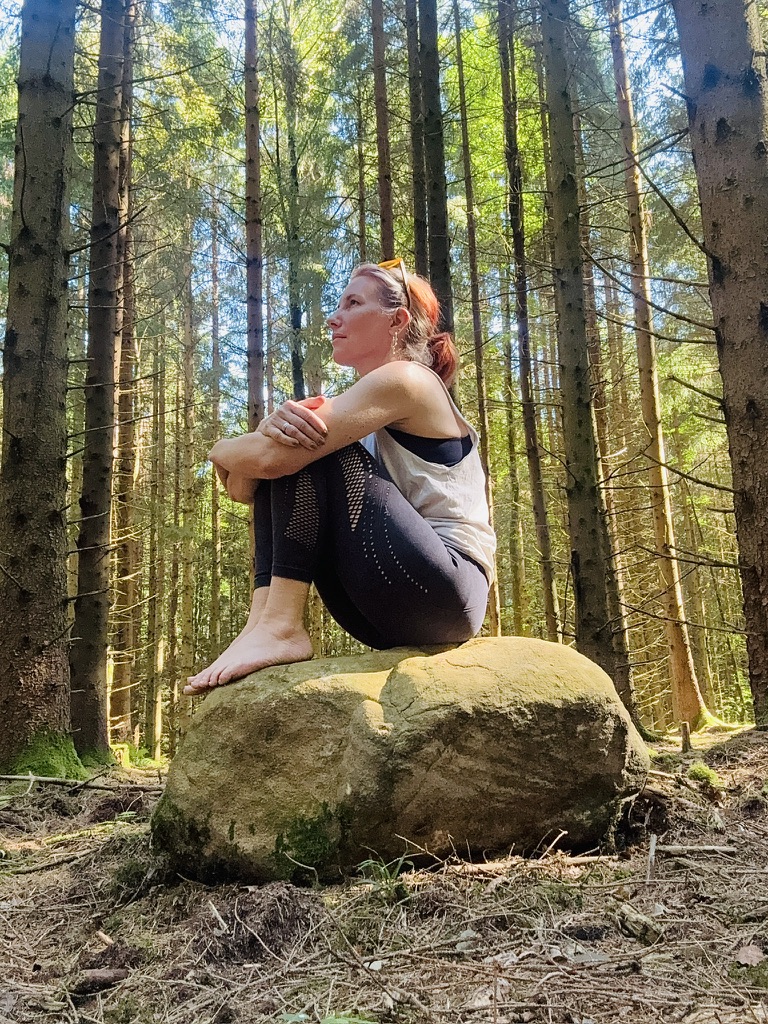
We often place mysticism and science at opposite ends of a spectrum. But sometimes mysticism is simply experience we have not fully translated yet.
When we say a forest calms us, that sounds poetic.
When we describe vagal tone, sensory processing, and environmental regulation, it sounds scientific.
Both describe the same truth: we are not separate.
This work lives in that seam — where art, land, body, and awareness meet. A place where old knowing and modern language deepen each other instead of competing.
Because maybe remembering how to listen — to rhythm, to silence, to the living world around us — is not mystical at all.
Maybe it is simply the way we come home to being human.
References
Csikszentmihalyi, M. (1990). Flow: The psychology of optimal experience. Harper & Row.
Levitin, D. J. (2006). This is your brain on music: The science of a human obsession. Dutton.
van Vugt, M. K. (2017). Meditation and the neuroscience of attention, mindfulness and flow. Current Opinion in Psychology, 28, 211–216.